
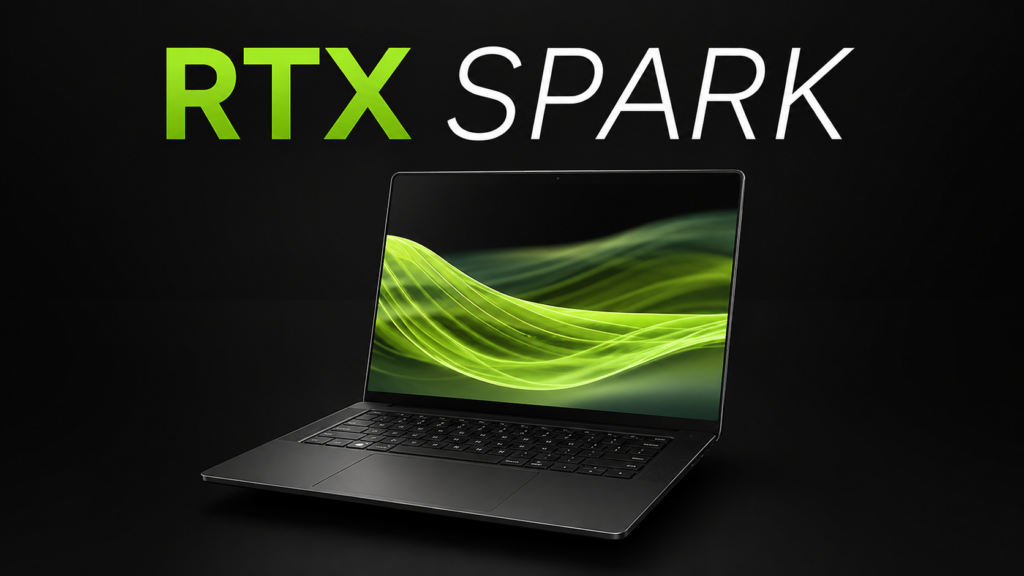
For years the high end of the Windows laptop world basically meant Intel or AMD inside, with NVIDIA showing up as a separate GPU. That arrangement just got shaken up. At its GTC keynote during Computex 2026, NVIDIA announced the RTX Spark, its first superchip built specifically for Windows PCs and laptops, and the framing is bold. CEO Jensen Huang says the PC is being reinvented around personal AI agents.
So what is the NVIDIA RTX Spark, really? It’s a single chip that puts an Arm-based CPU and a Blackwell GPU together, aimed at thin laptops and small desktops. Microsoft is on board too, optimizing Windows for it. There’s a lot of big talk attached to this launch, so here’s the honest version: what NVIDIA and Microsoft are actually claiming, which machines get it, when you can buy one, and the parts I’d wait to test before believing.
What Is the NVIDIA RTX Spark?
The RTX Spark is what NVIDIA calls a superchip, meaning the CPU and GPU live on the same package and talk to each other over a fast interconnect instead of across a slower bus.
The specs that matter
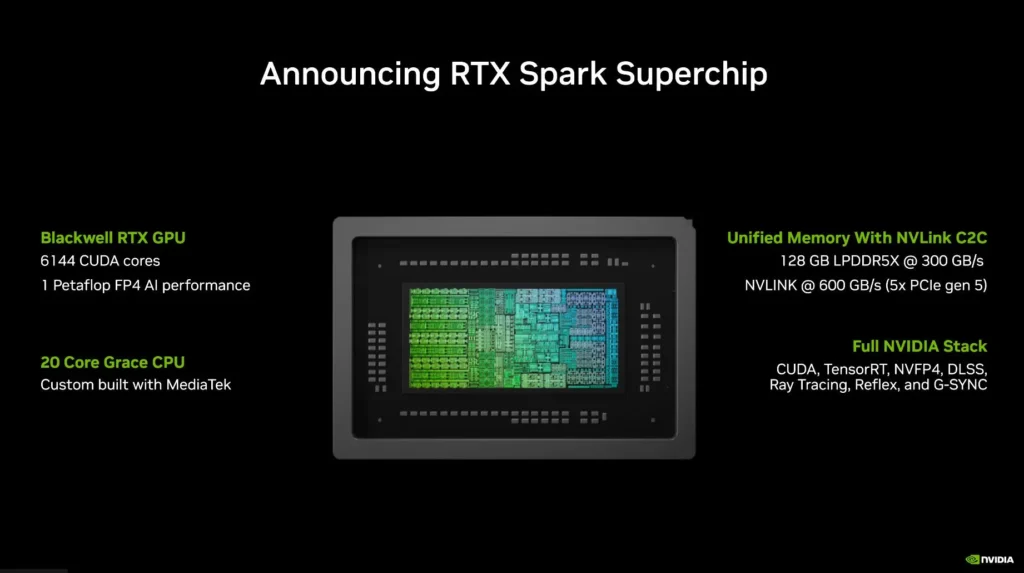
At full strength, NVIDIA says the RTX Spark pairs a 20-core Arm-based Grace CPU with a Blackwell GPU carrying 6,144 CUDA cores and fifth-generation Tensor cores. It tops out at 128GB of LPDDR5X unified memory with up to 300 GB/s of bandwidth.
That unified memory is the interesting bit. The CPU and GPU share one pool, so there’s no copying data back and forth between separate RAM and VRAM. NVIDIA built the chip on TSMC’s 3nm process and co-designed the CPU with MediaTek. On paper, TechPowerUp notes the graphics side sits close to a desktop RTX 5070, which is a lot of GPU for something this small.
Where it actually came from
Here’s the thing most of the hype skips: the chip isn’t brand new silicon. The Register points out it’s essentially the same GB10 superchip that already powers NVIDIA’s DGX Spark AI workstations, now repackaged for consumer Windows machines. That’s not a knock. It just means the hardware is more proven than the marketing makes it sound, and the real new work is on the Windows software side.
Which Laptops and PCs Will Use RTX Spark?
NVIDIA didn’t launch its own laptop. It launched a platform, and the usual big names are building around it.
The Surface Laptop Ultra and the OEM lineup
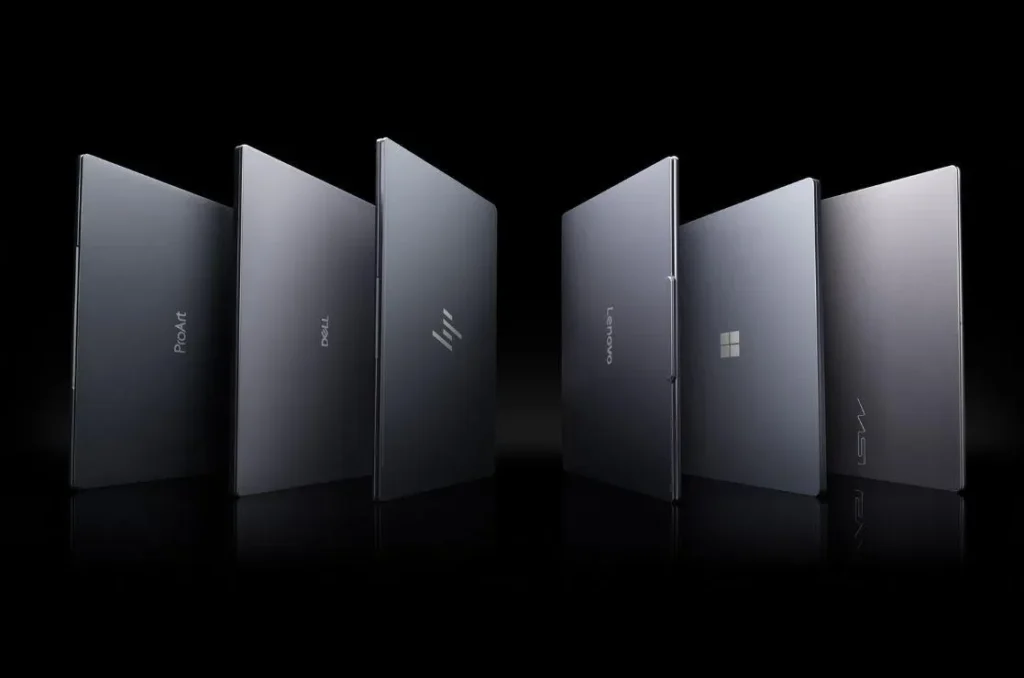
The headline device is Microsoft’s new Surface Laptop Ultra, a 15-inch premium machine. Beyond that, the first RTX Spark PCs are coming from Microsoft, ASUS, Dell, HP, Lenovo and MSI, with Acer and GIGABYTE expected to follow later. NVIDIA says the first laptops will be as thin as 14mm and as light as three pounds in machined aluminum. Microsoft is also folding these into its Copilot+ PC category.
When can you actually buy one?
This is the part to keep in mind before getting too excited. The first RTX Spark Windows PCs are slated for this fall, not now. NVIDIA hasn’t released independent benchmarks yet either, and says those are coming closer to launch. So everything below is a claim, not a tested result.
Is RTX Spark Good for Gaming?
Gaming is where I’m most curious, because Windows on Arm has tripped over games before.
The 1440p performance claim
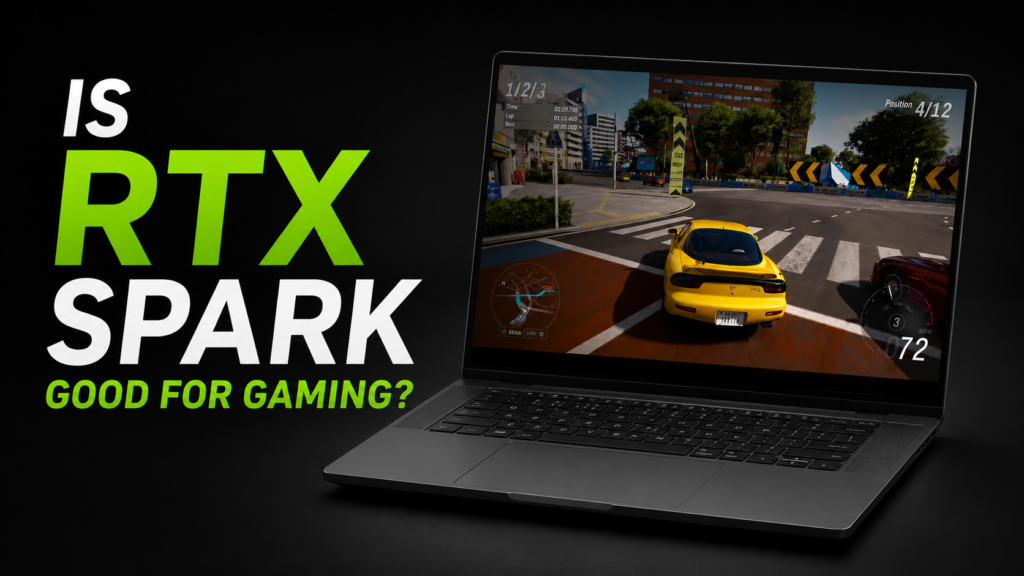
NVIDIA says RTX Spark laptops should handle the latest AAA games at 1440p above 100 FPS, with ray tracing, DLSS 4.5 and Reflex doing the heavy lifting. That’s a strong number for a thin-and-light. Just remember it leans on AI upscaling, so the raw rendering throughput is likely lower than that headline suggests. We’ll get a clearer picture once these run through real performance benchmarks.
The Windows on Arm compatibility question
This is the catch nobody should ignore. RTX Spark runs Windows on Arm, which means many x86 apps and games run through emulation. NVIDIA says it’s worked with around 100 Windows software providers, and Microsoft has tuned its Prism emulator and DirectX 12 for the chip. Native support is the goal, but compatibility is exactly the kind of thing that looks fine in a demo and gets messy in real-world usage. I’d hold judgment until we see how older titles and niche tools behave.
What Does a “PC for AI Agents” Even Mean?
NVIDIA keeps describing this as a move from the PC as a tool to the PC as a teammate. Stripped of the buzz, it comes down to running bigger AI models locally instead of in the cloud.
Running large models on your own machine
Because of that 128GB unified memory, NVIDIA claims top RTX Spark systems can run 120-billion-parameter language models locally, along with editing 12K video and handling 3D renders that need 90GB-plus of memory. For people who care about privacy or want to skip subscription costs, on-device models are a real draw. Whether everyday users need that much is a separate question, and one worth thinking through alongside which AI tools genuinely fit your workflow.
The Adobe and agentic angle
On the software side, NVIDIA says Adobe is rearchitecting Photoshop and Premiere for RTX Spark to lean on the GPU and unified memory, with support for AI agents that can assist mid-edit. Microsoft, for its part, says it tuned Windows scheduling so work gets split smartly across the CPU, GPU and NPU. Honestly, this is the make-or-break layer. Good hardware with rough software optimization would undercut the whole pitch.
Should You Wait for an RTX Spark Laptop?
If you’re shopping right now, nothing changes today, because these don’t ship until fall. The smart move is to watch, not pre-order.
What’s genuinely promising is the combination: a lot of GPU, a huge shared memory pool, and a first-party Microsoft push behind Windows on Arm. That’s a stronger setup than past Arm-on-Windows attempts had. What’s unproven is everything that matters in daily use, including real gaming compatibility, app stability through emulation, battery performance, and whether NVIDIA’s claimed numbers hold up outside its own slides. If you want a deeper baseline on the current crop, our Windows laptop reviews are a decent place to start while we wait.
The Bottom Line
The NVIDIA RTX Spark is a real shift in how Windows PCs get built, and the specs NVIDIA and Microsoft are claiming are legitimately impressive: an Arm Grace CPU, a Blackwell GPU near RTX 5070 territory, and 128GB of unified memory in a thin laptop. For now, that’s the key word. These are claims and demos, not field-tested results, and the launch is months out.
I’m optimistic but holding back until we can run one through real tests, especially on Windows on Arm compatibility and gaming. We’ll have hands-on benchmarks once review units land this fall. Subscribe and check back, and we’ll tell you whether the RTX Spark lives up to the talk or just looks good on a keynote slide.



One Response
Love it