A leaked PassMark result for the upcoming Intel Arc G3 Extreme has the handheld gaming world buzzing. The score puts Intel’s Panther Lake-based handheld chip about 25% ahead of the AMD Ryzen Z2 Extreme in multi-thread CPU performance, with an 8% lead in single-thread. On paper, that’s a serious shake-up in a category AMD has dominated since the Steam Deck.
Here’s the thing though, this is a single benchmark sample with a margin of error PassMark itself flagged as “High.” So before anyone calls the handheld race over, let’s look at what the numbers actually say and what they mean if you’re shopping for a gaming handheld right now.
What the Intel Arc G3 Extreme Benchmark Actually Showed
The leak originated from a PassMark database listing, spotted by leaker x86deadandback on X, with the numbers later confirmed across multiple outlets including WCCFTech’s coverage of the leak.
The PassMark Numbers in Plain Language
The Intel Arc G3 Extreme posted 29,622 in multi-thread CPU Mark and 4,288 in single-thread. For context, anything over 25,000 in multi-thread on a handheld is excellent, and 4,000+ in single-thread means individual tasks (game logic, UI responsiveness) feel snappy.
[INSERT CHART 1: chart1_cpu_benchmark.png] Alt text: Bar chart comparing PassMark CPU benchmark scores for Intel Arc G3 Extreme, AMD Ryzen Z2 Extreme, and Intel Core Ultra 5 338H
How It Compares to the Ryzen Z2 Extreme
The Ryzen Z2 Extreme, currently powering the ROG Xbox Ally X and similar premium handhelds, scores 23,649 multi-thread and 3,964 single-thread on average across 24 PassMark samples. That puts the Arc G3 Extreme roughly 25% faster in multi-thread tests and about 8% faster in single-thread workloads. According to Club386’s breakdown, even the GPU side of the leak shows promise. The Arc B390 hit 55fps in PassMark’s DirectX 12 graphics test versus 48fps from the Ryzen Z2 Extreme, a roughly 15% lead.
[INSERT CHART 2: chart2_performance_lead.png] Alt text: Horizontal bar chart showing Intel Arc G3 Extreme percentage lead over AMD Ryzen Z2 Extreme across CPU and GPU benchmarks
Where It Lands Against the Core Ultra 5 338H
This is where it gets interesting. The Intel Core Ultra 5 338H, a 25W laptop chip, scores 29,726 in multi-thread, basically tied with the Arc G3 Extreme. That tells us Intel’s handheld chip is performing at desktop-laptop levels in a much smaller power envelope. If those numbers hold up at lower TDPs, that’s the real story here, not just the AMD comparison.

What’s Inside the Intel Arc G3 Extreme
14 Cores, 14 Threads, No Hyper-Threading
Per Notebookcheck’s breakdown, the Arc G3 Extreme uses a hybrid layout: 2 Performance cores (Panther Cove), 8 Efficient cores (Darkmont), and 4 Low-Power Efficient cores. That’s 14 physical cores, 14 threads, no SMT/hyper-threading. Compare that to the Ryzen Z2 Extreme’s 8 cores and 16 threads, and you can see why Intel pulls ahead in heavily multi-threaded workloads. The chip runs up to 4.6 GHz turbo, with a measured base of 3.69 GHz on the test rig.
The Arc B390 iGPU and What Xe3 Brings
The integrated graphics is the genuinely exciting part. The Arc B390 packs 12 Xe3 cores at 2.3 GHz, the same iGPU Intel uses in its top Core Ultra X9 388H laptop chip. According to VideoCardz’s exclusive coverage, Intel claims around 50% more graphics performance than the Radeon 890M and over 77% more than the Arc 140V on Lunar Lake. The B390 also supports XeSS 3 upscaling and multi-frame generation up to 4x, which AMD’s RDNA 3.5 doesn’t currently match.
For more context on how Panther Lake performs outside handhelds, check our coverage on Windows laptop performance tests where these chips are starting to show up.
Memory and the 15-30W Power Envelope
The test rig used 32GB of LPDDR5X memory at 8,533 MT/s, which is fast even by 2026 standards. That bandwidth matters because integrated GPUs share system memory, and the B390 will need every bit of it to feed 12 Xe3 cores. The chip is designed for a 15-30W power envelope, exactly where handhelds need to live for sustained battery life.
Should You Trust This Benchmark Yet?
Honestly, not fully.
The “Sample Size of 1” Problem
Here’s what most coverage glosses over. The PassMark listing for the Arc G3 Extreme is based on a single sample, and PassMark itself flags the margin of error as “High.” That means the score could shift meaningfully once more units get tested. The Ryzen Z2 Extreme score it’s being compared against, on the other hand, is averaged across 24 samples. That’s not an apples-to-apples comparison yet. HotHardware’s analysis puts it well, treating early PassMark numbers as anything more than “interesting” is asking for disappointment. I’d want to see real-world performance benchmarks across multiple games and TDPs before drawing firm conclusions.
What We Don’t Know About TDP and Thermals
The big unknown is power. TechPowerUp pointed out that the TDP during this PassMark run isn’t disclosed. If the chip was running at 30W, those numbers are great. If it was running at 50W in a thermally unconstrained environment, the story changes completely. Handhelds live and die by sustained performance at 15W to 25W, and that’s where we’ll know if this chip is truly competitive.
Which Handheld Will Use the Intel Arc G3 Extreme?
The first device looks confirmed already.
The MSI Claw 8 EX AI+ Leak
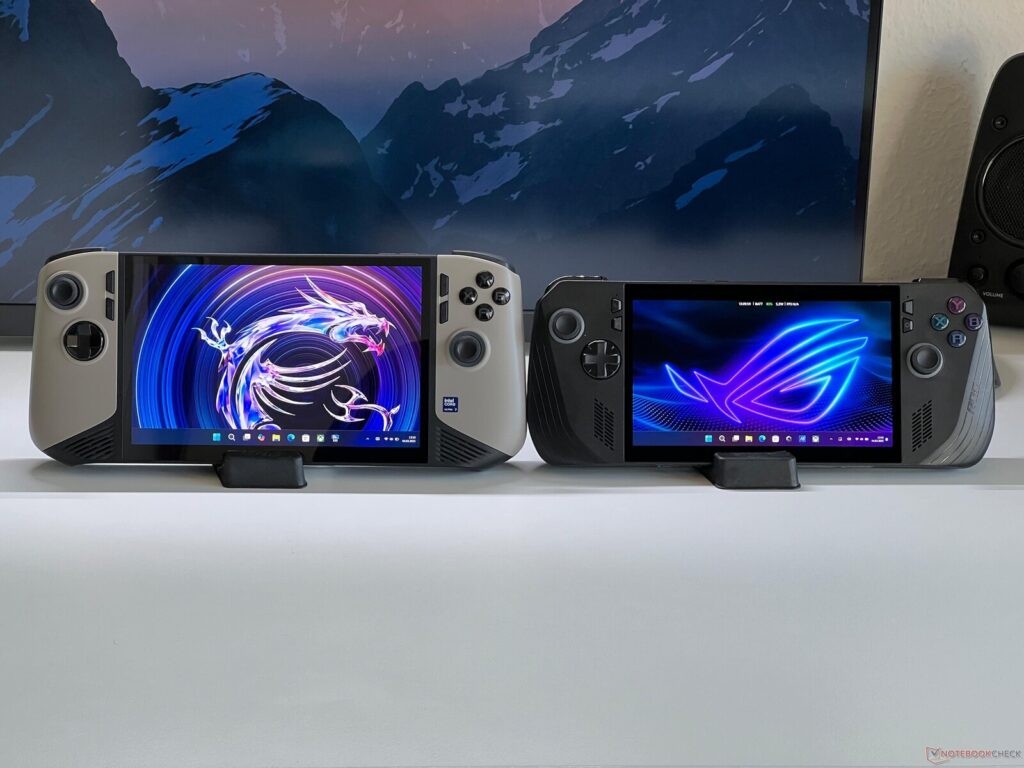
The PassMark sample’s motherboard ID (MSI MS-1T91) and the 8-inch 1920×1200 120Hz display in the test rig both match what an Italian retailer accidentally listed: the MSI Claw 8 EX AI+ with 32GB RAM and a 1TB Micron 2500 SSD. That gives us a clear picture of what the first Arc G3 Extreme handheld will look like.
Pricing Concerns at €1,599
This is where things get uncomfortable. The retailer listing showed a €1,599 price tag, roughly $1,750 USD before any region-specific markup. That’s significantly more than the ROG Ally X or current Claw models. WCCFTech is hoping the final US price comes in closer to $1,000, but with current memory and storage prices, that feels optimistic. If you’re shopping on a budget, our take on more sensible value picks might serve you better than waiting for this.
What This Means for the Handheld Market
Why AMD Is in a Tough Spot Until 2027
AMD’s next-gen handheld chip isn’t expected until the first half of 2027. That gives Intel roughly a year-long window to push the Arc G3 lineup, the Claw 8 EX AI+, and likely a Lenovo Legion Go successor. If real-world performance lives up to even half of this PassMark leak, AMD has a serious problem until Zen 6-based handhelds arrive.
The Arc B390’s support for XeSS 3 and multi-frame generation also matters here. Modern handhelds increasingly rely on upscaling and frame generation to hit playable frame rates, and Intel’s tools, paired with relevant AI tools and real use cases, are currently more advanced than what AMD’s drivers offer.
What to Do If You’re Buying a Handheld Today
For most people, my honest take is to wait. Computex 2026 is roughly a month away, where Intel is expected to officially announce the Arc G3 lineup. Real reviews and proper game testing will follow. If you can hold off until late summer 2026, you’ll have actual numbers across actual games at actual TDPs.
If you need a handheld today, the ROG Ally X with the Ryzen Z2 Extreme is still a strong daily driver. Just know something noticeably faster is probably coming before year’s end.
Final Thoughts
The Intel Arc G3 Extreme benchmark leak is genuinely exciting. A 25% multi-thread lead, a 15% GPU lead, and the most powerful integrated graphics in a handheld to date if those numbers hold. But it’s also a single sample with a high margin of error, an undisclosed TDP, and a €1,599 device behind it. Treat the hype as cautiously optimistic, not as fact.
For more honest takes on handhelds and laptop performance, our real-world performance benchmarks hub is where we’ll be tracking real reviews as they drop.